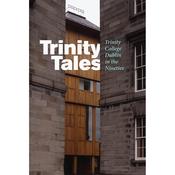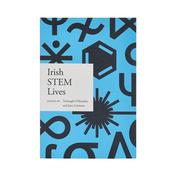
Encompassing the worlds of science, the arts and everything in between, this new instalment of Trinity Tales features actors Dominic West and Mario Rosenstock, writers and journalists Turtle Bunbury, Claire Kilroy and Belinda McKeon, eminent scientists such as Austin Duffy, and sportsman Mark Pollock.
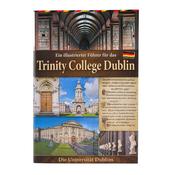
Like its three predecessors, this fourth instalment of Trinity Tales gathers together recollections of a decade at Trinity College Dublin. This time, the story is taken up by 1990s graduates–those who passed through its gates as the twentieth century drew to a close–and, through the forty individual voices assembled here, a vivid portrait emerges of student life during those transformative years.
Trinity students at the decade’s end had email, mobile phones and the vast resources of the Internet at their disposal. In addition, they were relatively debt-free (undergraduate tuition fees having been abolished in 1996) and every bit as likely to stay and find work in Ireland as to get on the first flight to London or New York. Reflecting this sense of rapid growth, new buildings started springing up around campus, most notably the Samuel Beckett Centre and Goldsmith Hall, and as the millennium approached, the college was expanding in all directions.
Those who arrived at Trinity in the nineties are the generation that came of age in an Ireland caught between the grim, recession-ridden 1980s and the brash, moneyed millennials, an almost unfathomable transition eclipsed only by that between the analogue and digital eras. As with previous volumes, royalties from the book go to the Long Room Library fund.
214 pages, paperback.
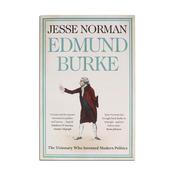
Longlisted for the Orwell Prize and the Samuel Johnson Prize for non-fiction; both conservative and subversive, Burke’s beliefs have never been more relevant, as MP Jesse Norman explains.
Philosopher, statesman, and founder of modern conservatism, Edmund Burke is both the greatest and most underrated political thinker of the past three hundred years. Born in Ireland in 1729, and greatly affected by its bigotry and extremes, his career constituted a lifelong struggle against the abuse of power.
Amid the 18th century’s golden generation that included his companions Adam Smith, Samuel Johnson and Edward Gibbon, Burke’s controversial mixture of conservative and subversive theories made him first a marginal figure, and finally a revered theorist – a hero of the Romantics.
He warned of the effects of British rule in Ireland, the loss of the American colonies, and most famously, he foresaw the disastrous consequences of the revolution in France. This he predicted, would trigger extremism, terror and the atomisation of society – a profound analysis that continues to resonate today.
In this absorbing new biography Conservative MP Jesse Norman gives us Burke anew, vividly depicting his dazzling intellect, imagination and empathy against the rich tapestry of 18th-century Europe.
Burke’s wisdom, Norman shows, applies well beyond the times of empire to the conventional democratic politics practised in Britain and America today. We cannot understand the defects of the modern world, or modern politics, without him.